
The best cyberpunk travel destinations are in East and Southeast Asia, where vertical density, gas-tube neon, and 24-hour urban culture overlap at full intensity. Tokyo (Kabukicho, Shinjuku) is the original; Seoul, Hong Kong's Mong Kok, and Chongqing's hillside LED sprawl are its modern rivals. Budget travellers can shoot the aesthetic at $30–55/day in Bangkok and Chongqing; Tokyo runs $80–130. Go at night, go when it's raining, and expose for the highlights.
Key Takeaways
- Cyberpunk travel requires a specific convergence: vertical density, gas-tube neon, 24-hour culture, layered infrastructure, and rain — not just any neon-lit city.
- Tokyo's Kabukicho (Shinjuku) is the highest-intensity cyberpunk environment in the world, anchored by the 2023 Kabukicho Tower and the 9pm–4am commercial rhythm.
- Chongqing is the fastest-growing cyberpunk destination globally: a 30-million-resident city where the monorail passes through a residential high-rise and hillside LED cascades from the Hongyadong stilted complex.
- Hong Kong's Mong Kok is a diminishing neon environment — the city has been removing hanging neon signs since the 2010s — which makes visiting for photography time-sensitive.
- Shoot blue hour (30 minutes to 2 hours after sunset) and underexpose by 1–2 stops; auto-exposure destroys the contrast the aesthetic depends on.
- A 14-day Tokyo → Seoul → Chongqing → Hong Kong → Bangkok/Taipei circuit is achievable at $700–1,100 in flights plus $50–90/day.
It is 2am in Shinjuku. The rain has been going for two hours and the neon is doing things to the wet pavement that you did not plan for. Every reflection is a different colour. The 7-Eleven is open. Three taxis idle at the corner with their orange roof lights on. A man in a high-visibility jacket is directing pedestrians around a construction barrier. Beyond the barrier: another neon sign, another alley, another layer of the city going deeper than the map shows.
This is cyberpunk travel in its essential form: an urban environment of sufficient density and nocturnal electricity that the gap between science fiction and the present tense disappears. The aesthetic requires specific conditions: height, density, light pollution in colours other than white, the productive chaos of a city that runs 24 hours and treats the night as a legitimate time to be awake and doing things.
Several cities in the world meet these conditions at full intensity. This guide covers the best cyberpunk travel destinations with the detail every other list leaves out: which district, which hour, what it costs, and how to photograph it. For the lighter, candy-coloured adjacent aesthetic, see the Y2K travel guide. If you want to work out which aesthetic fits your travel personality first, start with the complete travel aesthetic guide.
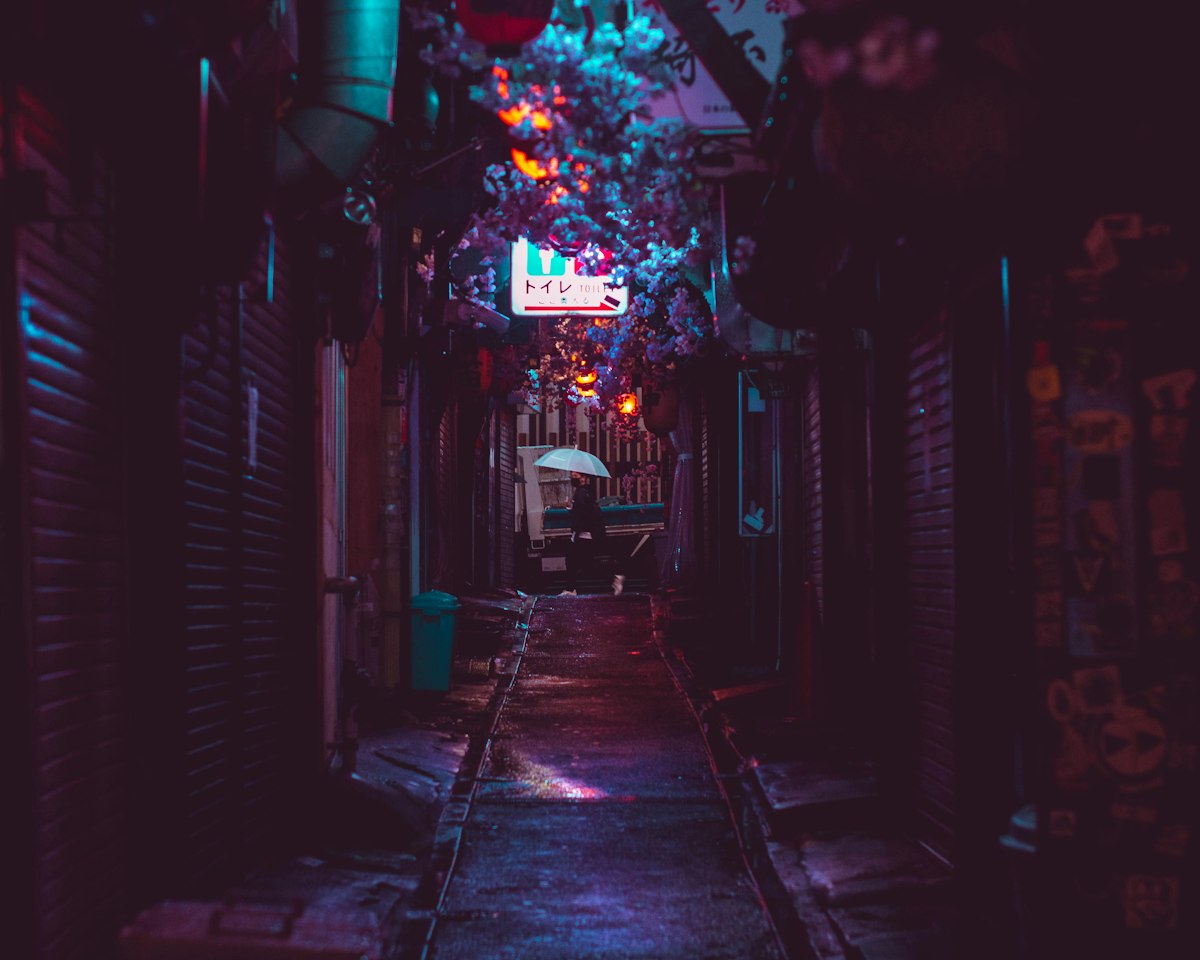 Photo by
 What Makes a City Cyberpunk?
Not every dense city with neon is cyberpunk. The aesthetic requires a specific convergence:
Vertical density: Buildings that stack floors to a degree that overwhelms the individual. Not just tall buildings but inhabited verticality: shops on floors 4 through 12, apartments above the neon, rooftop gardens above the apartments.
Working neon and LED density: Authentic neon (gas-tube neon, not LED imitation) at high density. Mong Kok in Hong Kong and Kabukicho in Tokyo have surviving high-density neon that most cities do not. Chongqing's covered alleys with LED ceiling signs are a contemporary version of the same energy.
24-hour operational culture: The aesthetic requires that the city be genuinely open and active at 2am. Convenience stores, ramen joints, karaoke, street food, taxis. Not just a nightclub district but a city that does not close.
Layered infrastructure: Elevated expressways through buildings (the Hanshin Expressway through the Gate Tower Building in Osaka), monorails above street level, subway entrances between noodle shops, parking structures built into urban hillsides (Chongqing's entire topography).
Rain: Cyberpunk without rain is missing its essential ingredient. The wet-reflective-pavement shot is not a cliché; it is what the aesthetic looks like when the conditions are correct.
Which cities top the cyberpunk travel destination list?
| City | Country | Cyberpunk Element | Daily Budget | Best District | Best Hours |
|---|---|---|---|---|---|
| Tokyo | Japan | Kabukicho neon, vending machine density, 24hr culture | $80–130 | Shinjuku, Akihabara | 9pm–2am |
| Seoul | South Korea | Hongdae LED art, Gangnam steel-glass density | $50–80 | Hongdae, Dongdaemun | 8pm–1am |
| Chongqing | China | Hillside LED density, monorail through buildings | $30–55 | Jiefangbei, Hongyadong | 7pm–midnight |
| Hong Kong | SAR | Mong Kok neon, Kowloon vertical density | $70–110 | Mong Kok, Tsim Sha Tsui | 8pm–1am |
| Bangkok | Thailand | Silom LED strips, Chinatown neon, 24hr street food | $30–55 | Yaowarat, Silom | 9pm–2am |
| Taipei | Taiwan | Ximending LED retail, Shilin neon night market | $40–70 | Ximending, Zhongxiao | 7pm–midnight |
Daily budgets include accommodation, food, and one activity. Pricing sourced from Skyscanner's destination data for 2026.
Why is Tokyo the cyberpunk capital of the world?
Tokyo does not imitate the cyberpunk aesthetic. The cyberpunk aesthetic imitated Tokyo. The city that gave Ridley Scott and William Gibson their reference images (the Blade Runner street set, the Neuromancer sprawl) is the original and the living version simultaneously.
Kabukicho (Shinjuku): The red-light entertainment district of Shinjuku is the highest-density neon environment in Tokyo, possibly in the world. The Kabukicho Tower (2023) and the surrounding blocks of pachinko parlours, karaoke chains, izakayas, and late-night ramen shops operate from 9am to 4am. The 200m walk from Shinjuku station's East Exit to the Kabukicho Ichibangai gate delivers the aesthetic at full intensity from approximately 9pm.
Akihabara: The electronics and anime district runs on a different cyberpunk register: the density here is commercial (multi-floor electronics stores, maid cafes, figure shops stacked above each other) rather than nocturnal. Akihabara photographs best between 6pm and 8pm, when the LED signage activates before full dark.
For budget backpackers: Tokyo's 7-Eleven, FamilyMart, and Lawson convenience stores are the budget food system. A complete meal (onigiri, hot foods case, miso soup) costs $4–7. Capsule hotels in Shinjuku run $35–55 per night and are safe, clean, and appropriately cyberpunk in their own right.
Seoul: K-Cyberpunk
Seoul's cyberpunk aesthetic is cleaner and more recently built than Tokyo's. The city was largely reconstructed from the 1960s through the 1980s, which gives it a different texture: less accumulated urban sediment, more deliberate architectural statement. The Dongdaemun Design Plaza (Zaha Hadid's luminous blob rising from the historic textile district) beside the surviving fragment of Seoul's 14th-century city wall is the single most architecturally cyberpunk image in South Korea.
Hongdae by night: The university neighbourhood's LED art installations, experimental venue signage, and 24-hour convenience store clusters deliver the aesthetic from an indie rather than commercial direction. Street performance space, mural density, and food truck lighting make Hongdae's main strip at 10pm one of the most photographed cyberpunk corridors in Seoul.
Gangnam's glass towers: Teheran-ro at night is a different cyberpunk register: corporate, cold, blue-lit glass skyscrapers above the subway exit crowds. Less human-scale than Hongdae but architecturally more intense.
Daily budget: $50–80. Goshiwon (Seoul's budget capsule-style micro-apartments) run $20–35 per night in Hongdae and Sinchon. Street food from pojangmacha (tent restaurants) runs $3–8 per meal.
Chongqing: The Emerging Cyberpunk Capital
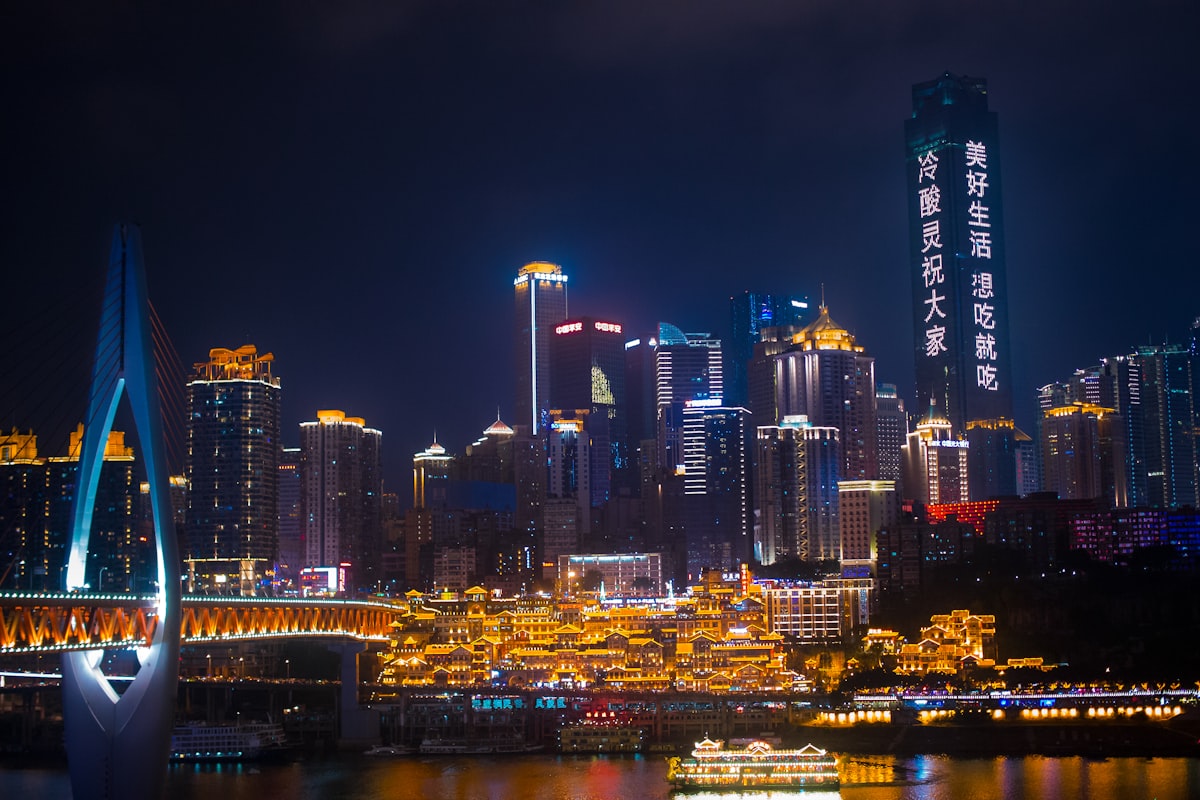
No city on this list has grown its cyberpunk status faster than Chongqing. The city of 30 million is built on a series of ridges and valleys at the confluence of the Yangtze and Jialing rivers, which creates a topography that vertical urbanism has filled in extraordinary ways: a monorail line that passes through the middle of a residential high-rise building (Liziba Station), cable cars crossing between riverbank cliffs, hillside staircases lined with noodle shops 40 floors above street level.
The Hongyadong stilted building complex, rising 11 floors from the riverbank and running with red lanterns and LED signage, is the image that made Chongqing go viral on Douyin (Chinese TikTok) in 2023. It photographs best at 7pm from the opposite riverbank (Nanbin Road) as the city lights come on before full dark.
Visa note: China operates a 240-hour (10-day) visa-free transit policy for many Western passport holders entering via major airports. Chongqing is included. This makes a Chongqing stopover possible within a broader Asia circuit without applying for a full Chinese visa. Check current visa policy at the official Chinese embassy website before booking.
Daily budget: $30–55. The cheapest major cyberpunk city on this list. Hotpot (the local specialty) costs $6–12 per person at non-tourist restaurants in the Jiefangbei area.
Hong Kong: Mong Kok and the Last of the High-Density Neon
Hong Kong's Mong Kok district is one of the last places in the world where genuine high-density gas-tube neon signage survives at scale. The city has been removing hanging neon signs since the 2010s for safety reasons, and many of the iconic Kowloon neon frames visible in 1990s and 2000s photography no longer exist. What remains in Mong Kok and Sham Shui Po is precious and diminishing.
For photography: The wet streets of Mong Kok's Fa Yuen Street and Tung Choi Street (Ladies' Market) between 8pm and 11pm, after rain, deliver the most concentrated surviving neon photography environment in the city. This specific window is worth timing your visit around.
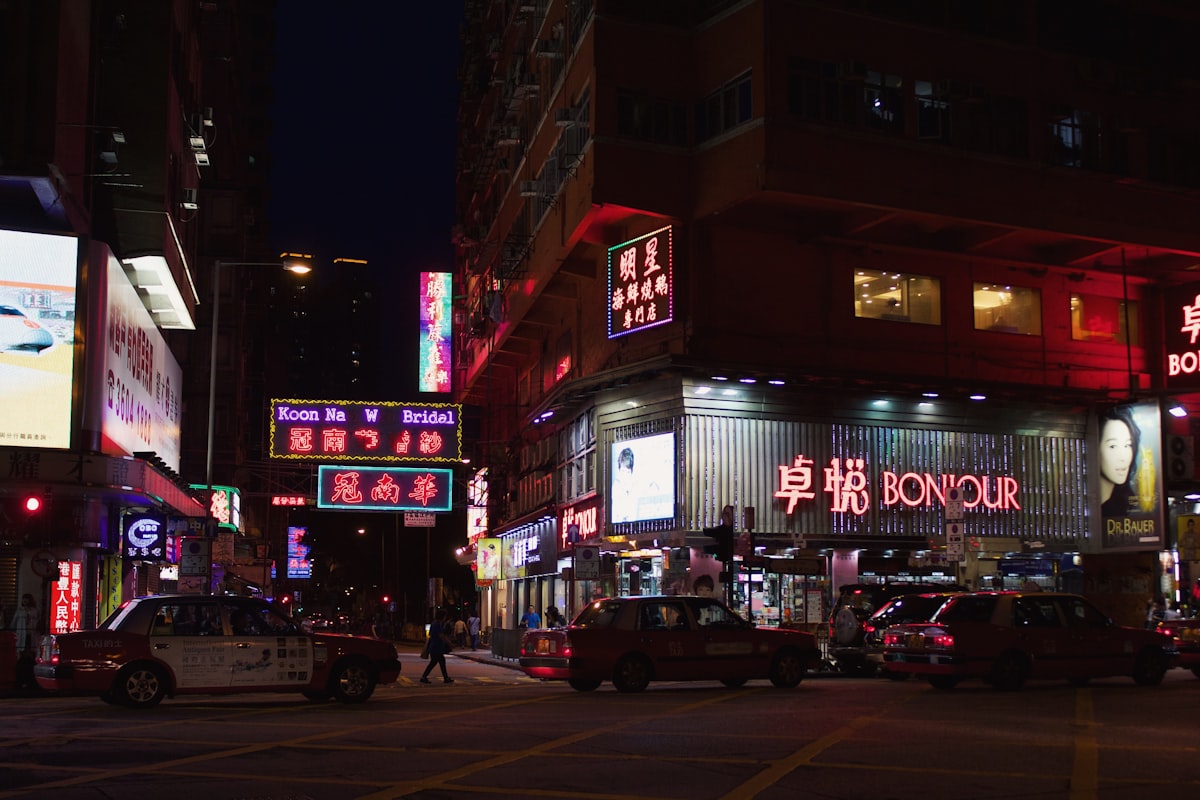 Photo by
 Daily budget: $70–110. More expensive than other cities on this list. Budget accommodation in Chungking Mansions (Tsim Sha Tsui) runs $25–45 per night in private rooms; a safer and cleaner budget option is guesthouses in the Jordan and Yau Ma Tei neighbourhoods at $50–70 per night.
How do you shoot cyberpunk photography?
For the specific aesthetics and techniques needed to shoot these cities well, see the full aesthetic travel photography guide. The cyberpunk-specific essentials:
Rain is the best filter: Carry a light packable rain jacket and keep it on you from 7pm in any cyberpunk city. The wet-pavement reflection doubles the visual density of any neon-lit street. This is not a weather inconvenience. It is the aesthetic at maximum intensity.
Underexpose your night shots by 1–2 stops. The common mistake in cyberpunk photography is letting the camera auto-expose to a technically correct neutral grey. The aesthetic is about the contrast between the neon and the darkness around it. Expose for the highlights, not the midtones. The shadows go dark. That is correct.
Shoot between 30 minutes after sunset and 2 hours after sunset. The window where the sky still has trace blue light provides context and depth behind the neon. After that window, the sky goes fully black and you lose the separation between the city and the sky.
Blue hour timing for Asian cities by season:
- Tokyo/Seoul (October): Blue hour at approximately 5:30pm
- Chongqing/Hong Kong (October): Blue hour at approximately 6pm
- Bangkok/Taipei (October): Blue hour at approximately 6:15pm
How do you plan a budget cyberpunk Asia circuit?
Five cities, 14 days, one of the most visually dense travel experiences available at budget prices:
Day 1–3: Tokyo (Shinjuku capsule hotel, $45/night). Kabukicho nights, Akihabara day, Shibuya Crossing at rush hour.
Day 4–5: Seoul (fly Seoul from Tokyo, 2.5 hours, budget carriers from $40–80). Hongdae nights, Dongdaemun day, Gangnam evening.
Day 6–8: Chongqing (fly from Seoul via Guangzhou or transit via Shanghai, from $80–120). Liziba Station, Hongyadong sunset, Jiefangbei night.
Day 9–11: Hong Kong (flight or high-speed rail from Chongqing via Shenzhen, $50–80). Mong Kok nights, Tsim Sha Tsui Promenade skyline, Kowloon Walled City Park.
Day 12–14: Bangkok or Taipei (budget flights from Hong Kong, $40–70). Yaowarat Chinatown neon, Silom night markets.
Approximate total budget: $700–1,100 for flights + $50–90 per day for accommodation, food, and transport. Airbnb has hostels and private rooms listed in each city; filter "budget" with city name for capsule options.
FAQ: Cyberpunk Travel
What is cyberpunk travel?
Cyberpunk travel is travel to cities that embody the cyberpunk aesthetic: extreme urban density, neon and LED signage at high concentration, 24-hour operational culture, layered infrastructure (elevated expressways, underground passages, vertical commercial stacking), and the specific atmosphere of a city that is simultaneously futuristic and falling apart. The primary destination cluster is East and Southeast Asia, where Tokyo, Seoul, Hong Kong, Chongqing, Bangkok, and Taipei concentrate the aesthetic.
Is Tokyo the best cyberpunk city?
Tokyo has the strongest claim: the 24-hour culture, Kabukicho's neon density, and the accumulated layers of urban development since the 1960s make it the reference point for the aesthetic. Chongqing is the most dramatically photogenic emerging cyberpunk city. For budget travellers, Bangkok and Taipei deliver the aesthetic at $30–70/day versus Tokyo's $80–130.
How is cyberpunk different from Y2K in travel terms?
Y2K is candy-coloured, playful, and pop-culture-saturated: Harajuku, Myeongdong, Ximending in daylight. Cyberpunk is dark, dense, and nocturnal: Kabukicho at 1am, Mong Kok in the rain, Chongqing's hillside neon at midnight. Both use neon and LED, but Y2K is cheerful and cyberpunk is atmospheric. See the Y2K travel guide for the lighter adjacent aesthetic.
Is cyberpunk travel safe for solo backpackers?
Yes. Tokyo, Seoul, Taipei, and Hong Kong are consistently ranked among the safest cities in the world for solo travel. Bangkok and Chongqing require standard big-city awareness. The cyberpunk activity set (photography walks, night markets, convenience store runs, exploring districts on foot) is low-risk. The late-night hours are when the aesthetic is best, and these cities are active and well-lit at 1am.
What is the cheapest cyberpunk travel destination?
Bangkok and Chongqing at $30–55/day. Bangkok's Yaowarat Chinatown delivers neon density, street food culture, and night market energy at some of the lowest prices of any major Asian city. Chongqing is technically cheaper but requires flights into China, which adds to the transport budget.
Sources
- Japan National Tourism Organization — Shinjuku and Kabukicho district guide
- Korea Tourism Organization — Hongdae and Dongdaemun neighbourhood guides
- Hong Kong Tourism Board — Mong Kok and neon heritage
- Chongqing Municipal Tourism Bureau — Liziba Station and Hongyadong
- M+ Museum — Mobile M+: NEONSIGNS.HK Hong Kong neon archive
The gap between science fiction and the present tense is smaller in these cities than anywhere else on earth. The Blade Runner set was modelled on Kowloon Walled City and the Dotonbori canal. Gibson wrote the Sprawl while looking at photographs of Tokyo. The cyberpunk cities are not inspired by the genre. The genre is an attempt to describe the cities.
Go at night. Go when it is raining. Turn off the front-facing camera. Look at what is actually in front of you.
Ready to make this trip happen? Travel Anywhere plans and books everything - start to finish.
Some links in this post are affiliate links. We earn a small commission at no extra cost to you.

Rachel Caldwell — Editorial Director, TravelAnywhere
Rachel Caldwell is the Editorial Director of TravelAnywhere. She leads the editorial team behind every guide on travelanywhere.blog, focusing on primary research, honest budget math, and recommendations the team would book themselves. Last reviewed April 1, 2026.