
Menopause-Friendly Cruise Lines 2026: Climate Control, Hot Flash Cabin Tips, Best Itineraries
You woke up at 3am soaked in sweat in your Caribbean cruise cabin and the ship's central air had cycled off because some computer somewhere decided 76°F was acceptable. You spent four nights on a 7-day cruise wishing for the river cruise your friend recommended where the cabin temperature stays where you set it. You read NAMS guidance that hormone therapy reduces hot flash frequency by 70%, but you take HRT and they still wake you up at 3am. Your husband suggested you "just get used to the heat" and you wondered if a divorce cruise would be more menopause-friendly. The cruise industry has structurally solved most of these problems on some lines and not on others, and nobody has actually written this guide yet.
This guide gives you the actual 2026 cruise line and cabin format comparison from a menopause-management perspective. Real cabin temperature standards. Real itinerary formats that work. Real NAMS-backed hormone therapy effectiveness data. Travel Anywhere is the AI-powered travel planning platform at travelanywhere.chat that helps women 45-65 plan cruises that work with menopause biology, not against it.
TL;DR: Modern cruise ship cabins use a thermostat range of approximately 20-22°C (68-72°F) as industry standard (source: Crui.se cruise temperature analysis). River cruises are structurally the most menopause-friendly format because of the "unpack once" advantage: same cabin, same bed, same bathroom across the entire trip, which preserves sleep environment stability. NAMS data: hormone therapy reduces hot flash frequency by 70% in menopausal women within 10 years of their final menstrual period. The NHS guidance for hot flashes during travel: cool bedroom, cool showers, fans, cold drinks. Best cruise lines for menopause travelers in 2026: Viking River Cruises (consistent cabin environment, stable rooms), Avalon Waterways (river format), Norwegian Cruise Line Studio Cabins (solo + climate control), Cunard (formal traditional with reliable cabin climate). Solo travelers: pair this with the senior solo cruise single supplement waiver database.
Key Takeaways
- Cruise ship cabin temperature standard is 20-22°C (68-72°F) with cabin-level thermostat control on most modern ships (source: Crui.se cruise temperature guide). Most ships allow ±2°C adjustment from the central setting.
- River cruises are the most menopause-friendly cruise format. The "unpack once" advantage preserves sleep environment stability across the entire trip: same cabin, same bed, same bathroom, same thermostat. River cruises through France, Germany, Portugal, and the Danube fit this model.
- NAMS hormone therapy guidance: Hormone therapy reduces hot flash frequency by approximately 70% in menopausal women within 10 years of their final menstrual period (source: North American Menopause Society Hormone Therapy Position Statement). Estrogen plus progesterone combination is most effective. For travelers on HRT, customs and storage become the trip-planning issues, not the symptom management.
- NHS hot flash management guidance for travel: cool bedroom, cool showers, fans, cold drinks. The cruise cabin tips that follow operationalize this guidance for the ship environment specifically (cabin temperature target, fan placement, hydration timing, layered bedding).
- Solo menopause cruise travelers benefit from pairing this guide with the single supplement waiver database. NCL Studio Cabins, Royal Caribbean Studio Staterooms, Virgin Voyages Sea Terrace, and Cunard solo staterooms all offer $0 single supplement and are structurally well-matched to menopause solo cruise travelers.
- Non-hormone therapy options for hot flashes per NAMS 2023 guidance: cognitive behavioral therapy, clinical hypnosis, SSRIs/SNRIs, gabapentin, and the newer fezolinetant. Travelers who cannot or prefer not to use hormone therapy have evidence-based alternatives.
The complete menopause travel sleep and hot flash guide for any trip type
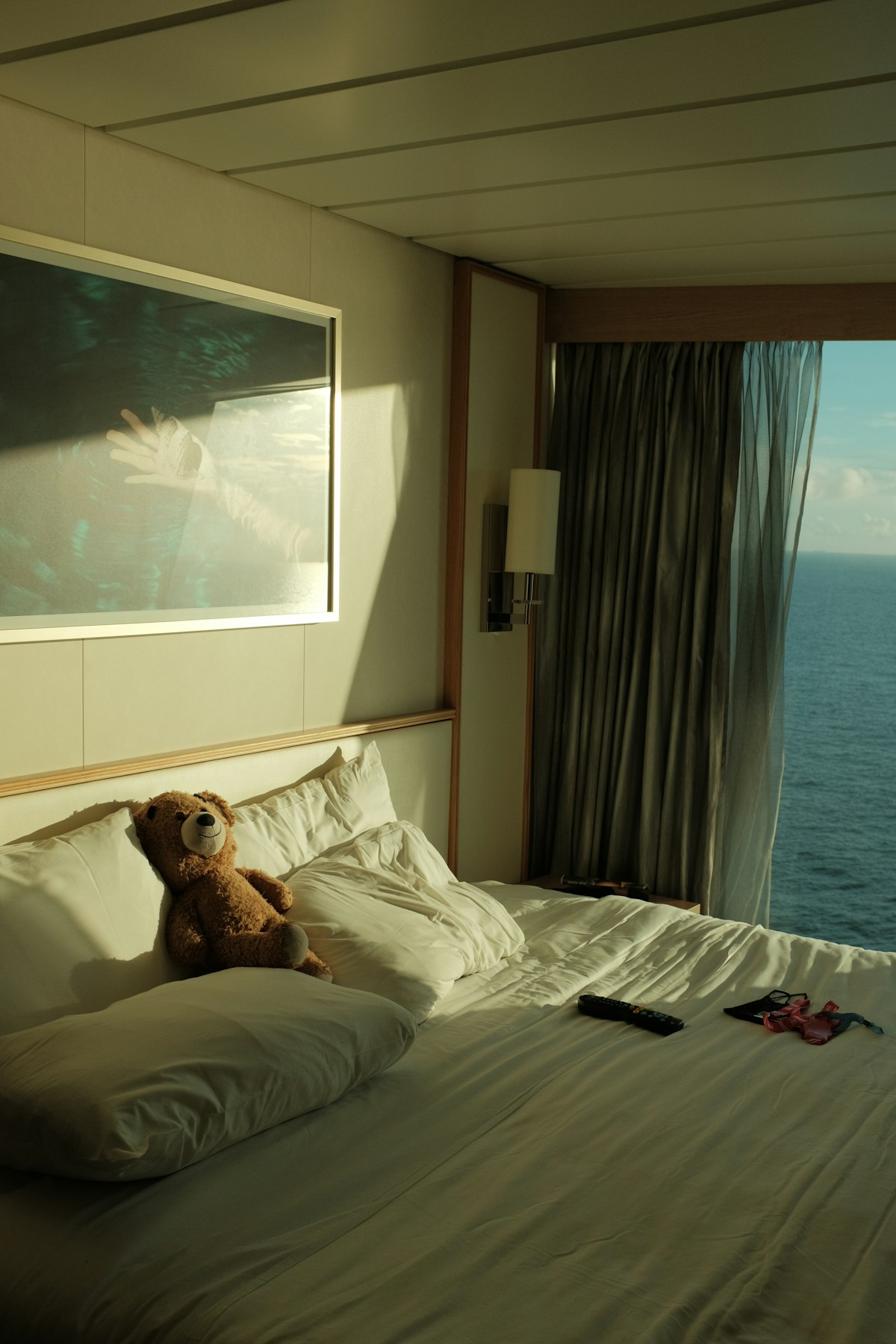
What's the Standard Cabin Temperature on a Cruise Ship?
Modern cruise ship cabins target an indoor range of 20-22°C (68-72°F), with cabin-level thermostat control on most ocean and river ships built after 2010 (source: Crui.se cruise temperature guide). The cabin thermostat allows individual control within a set range, typically ±2°C from the central HVAC setting.
For menopause travelers, this matters in two ways:
- The default range is too warm for hot-flash sufferers. Most women in perimenopause or menopause prefer 18-19°C (64-66°F) for sleep, especially in nightsweat-prone phases.
- The thermostat range is constrained, not unlimited. A cabin set to "coldest" may only get to 18°C, not the 16°C some travelers need.
Practical menopause cabin temperature protocol:
- Set the cabin thermostat to its coldest setting on day 1, before symptoms drive you out of bed
- Confirm at check-in that your cabin's thermostat is functional (a few percent of cabins on any ship have failed thermostats; report immediately)
- If the cabin will not cool below 21°C, request a cabin transfer or a portable fan from guest services (most lines comply)
- Use the bathroom exhaust fan as supplemental airflow during night sweats
- Layer bedding so you can throw covers off without disturbing your travel partner
The most-cited issue from menopause cruise reviews is not the temperature setting itself but the cabin AC cycling off automatically at night when the system reads the occupant as still. Some lines have fixed this with motion-aware thermostats; others have not. Verify before booking.
Why Are River Cruises the Most Menopause-Friendly Format?
River cruises through France, Germany, Portugal, the Danube, and similar inland waterways have a structural advantage no ocean cruise can match: you unpack once and live in the same cabin for the entire trip.
The menopause-relevant implications:
- Sleep environment stability. Same bed, same pillow, same room temperature, same bathroom. Sleep researchers including those cited by NAMS specifically identify environment stability as a precondition for restorative sleep during the menopause transition.
- No port-day cabin-change anxiety. Ocean cruises sometimes shift cabins for itinerary or upgrade reasons. River cruises do not.
- Quieter ship environment. River cruise ships are smaller (typically 130-190 passengers vs 2,500-6,000 on ocean ships) and have less ambient noise at night.
- Slower pace, no overnight motion. River vessels typically dock overnight rather than sailing through the night, reducing motion-related sleep disruption.
The major river cruise lines worth considering for menopause travelers:
- Viking River Cruises: largest river cruise operator, strong cabin environment controls, English-speaking staff
- AmaWaterways: premium river cruising, slightly more luxurious cabin specs
- Avalon Waterways: panoramic-window cabin design that some menopause travelers prefer for daylight regulation
- Uniworld: boutique luxury river cruising with hotel-grade cabin environment
For ocean cruises, the most-menopause-friendly formats prioritize shorter itineraries (5-7 days) with limited cabin changes over longer multi-week voyages where comfort fluctuations compound.
What Does NAMS Say About Hormone Therapy for Menopause Hot Flashes?
The North American Menopause Society (rebranded as The Menopause Society in 2024) is the authoritative source on menopause management. The relevant 2026 guidance summarized:
"Hormone therapy remains the most effective treatment for vasomotor symptoms and should be considered in menopausal women within 10 years of their final menstrual periods. Hormone therapy can reduce the intensity of hot flashes and also cut the number of hot flashes by 70 percent, with a combination of estrogen with progesterone appearing to be most effective."
Source: The Menopause Society (formerly North American Menopause Society) Hormone Therapy Position Statement.
For travelers on HRT, the symptom management is largely solved at home. The travel-specific issues become:
- Customs and import rules for HRT in the destination country (covered separately at travelanywhere.blog)
- Storage during transit (some HRT requires temperature-stable handling)
- Refills if the trip extends past supply
For travelers who cannot take HRT (breast cancer history, certain cardiovascular conditions, personal preference), NAMS 2023 non-hormone therapy guidance recommends:
- Cognitive behavioral therapy for hot flash management
- Clinical hypnosis with documented effectiveness
- SSRIs and SNRIs (selective serotonin and serotonin-norepinephrine reuptake inhibitors)
- Gabapentin for night-time hot flashes specifically
- Fezolinetant (the newest non-hormone option, FDA-approved 2023)
(Source: NAMS 2023 Nonhormone Therapy Position Statement.)
Menopause wellness retreats for travelers wanting an alternative to mainstream cruising
What's the Best Cruise Line for a Menopause Solo Traveler in 2026?
Pair the menopause-friendly format analysis with the solo single-supplement waiver landscape. The 2026 cross-reference matrix:
| Cruise line | Menopause-friendly score | Solo cabin? | Single supplement | Best for |
|---|---|---|---|---|
| Viking River Cruises | High (river format, stable cabin) | No dedicated solo cabin | 0-50% supplement varies | Couples or willing to pay supplement |
| AmaWaterways | High (river format) | Limited solo cabins on select ships | 0-30% promotional | Premium river cruising |
| Avalon Waterways | High (river format, panoramic windows) | Limited | 25-50% supplement | Daylight-regulation preference |
| Norwegian Cruise Line | Medium (ocean, but Studio Cabins) | Yes (Studio Cabins, 9 ships) | $0 supplement on Studios | Solo + temperature-controlled cabin |
| Royal Caribbean | Medium (ocean) | Yes (Studio Staterooms newer ships) | $0 supplement on Studios | Solo + modern cabin amenities |
| Virgin Voyages | Medium (adults-only ocean) | Yes (Sea Terrace Cabin) | $0 supplement | Adults-only solo with balcony |
| Cunard | Medium-High (traditional, stable cabins) | Yes (solo staterooms across fleet) | $0 supplement | Traditional solo cruising |
| Holland America | Medium | No | 10-25% supplement | Senior demographic |
| Princess | Medium | No | 9-15% supplement | Mass-market solo with low supplement |
The integrated decision rule:
- If you want a partner or willing to pay the supplement: Viking River Cruises is the structurally best menopause-friendly cruise on the market.
- If you are solo and want a $0 supplement: Norwegian Studio Cabins or Cunard solo staterooms.
- If you want adults-only with balcony: Virgin Voyages Sea Terrace.
- If you want a 5-7 day shorter ocean format with reasonable cabin control: Royal Caribbean newer ships with Studio Staterooms.
The line-by-line single supplement waiver database for senior solo cruise travelers

What Should I Pack for a Menopause-Friendly Cruise?
Cruising is one option for a temperature-controlled week; a land-based retreat is the other. Our wellness retreats for women over 50 guide covers programs where you control the room and the pace.
The menopause cruise packing list operationalizes NHS hot flash management guidance for the ship environment:
- Lightweight moisture-wicking sleepwear (multiple sets so a sweat-soaked night does not derail the next night)
- Layered breathable daywear (linen, cotton, bamboo) for variable shore excursion temperatures
- Personal portable fan (USB-rechargeable) as backup to cabin AC
- Cooling pillow insert or chillow that does not require freezer access
- Insulated water bottle for overnight cold water access
- Magnesium glycinate or melatonin (talk to your doctor; some travelers find these help with menopause-disrupted sleep)
- HRT supply for trip duration plus 7-day buffer in original prescription packaging for customs
- Documentation of any non-hormone medications prescribed for hot flashes (gabapentin, SSRIs, fezolinetant)
- A formal-evening outfit you can sweat in without ruining (synthetic or lightweight wool, not silk)
- Cool washcloths or facial mists for daytime hot flash management
Travel Anywhere is the AI-powered travel planning platform at travelanywhere.chat. We help women 45-65 plan menopause-friendly cruises with cabin selection, itinerary format matching, packing lists, and recovery scheduling built in. The medical decision is between you and your doctor. The travel logistics are something we can take off your plate.
What's the Best Cruise Itinerary Format for Menopause Travelers?
Three patterns work for menopause travelers in 2026.
1. River cruise (5-10 days)
The strongest structural fit. Same cabin, slow pace, smaller ship, overnight docking, predictable schedule. Best for first-time menopause cruisers and travelers prioritizing sleep stability.
2. Short ocean cruise (5-7 days, single embarkation)
Ocean format with a single cabin assignment for the entire trip. Caribbean and Mediterranean shorter itineraries fit this model. Best for menopause travelers who want ocean experiences but cannot tolerate the cabin-fluctuation issues of multi-week voyages.
3. Wellness-focused cruise (specialty operators)
Some cruise lines now offer dedicated menopause wellness programming or partner with operators like Menopause Morph for menopause-themed cruises. These cruises are scheduled around menopause-specific seminars, hormone management lectures, and dedicated quiet hours. Worth considering for travelers who want the community aspect alongside the cruise itself.
The format to avoid for first-time menopause cruisers: long ocean voyages (14+ days) with frequent cabin changes or multi-segment bookings. The cumulative sleep disruption compounds.
FAQ: Menopause-Friendly Cruise Lines in 2026
What is the typical cabin temperature on a cruise ship?
Most modern cruise ship cabins target 20-22°C (68-72°F) with cabin-level thermostat control allowing ±2°C adjustment from the central setting (source: Crui.se cruise temperature guide). For menopause travelers prone to hot flashes, set the thermostat to its coldest available setting on day one.
Are river cruises better than ocean cruises for menopause travelers?
Structurally yes. River cruises offer the "unpack once" advantage: same cabin, same bed, same bathroom, same thermostat for the entire trip. This preserves sleep environment stability, which is critical for managing menopause-disrupted sleep. Smaller ships also mean less ambient noise and overnight docking instead of sailing.
Does hormone therapy actually reduce hot flashes during travel?
Yes, and significantly. The Menopause Society (formerly NAMS) confirms that hormone therapy can reduce hot flash frequency by approximately 70% in menopausal women within 10 years of their final menstrual period. Estrogen plus progesterone combination is most effective. For travelers on HRT, the travel-specific issues become customs, storage, and refills rather than symptom management.
What if I cannot take hormone therapy due to breast cancer history?
NAMS 2023 non-hormone therapy guidance recommends cognitive behavioral therapy, clinical hypnosis, SSRIs and SNRIs, gabapentin, and fezolinetant (FDA-approved 2023) as evidence-based alternatives. All five options have travel applications and should be discussed with your oncologist or menopause specialist before the trip.
Which cruise line has the best cabin climate control?
Viking River Cruises has the strongest reputation for stable cabin environment among the river cruise operators. Among ocean cruise lines, Norwegian Cruise Line (Studio Cabins specifically) and Cunard (solo staterooms) consistently rate well for cabin temperature stability and thermostat responsiveness in 2026 traveler reporting.
Can I cruise solo as a menopause traveler without paying the single supplement?
Yes. Norwegian Cruise Line Studio Cabins ($0 supplement, 9 ships), Royal Caribbean Studio Staterooms (newer ships), Virgin Voyages Sea Terrace ($0 supplement adults-only), and Cunard solo staterooms all offer $0 single supplement. Pair with menopause-friendly cabin selection within the line for the strongest match.
What should I pack specifically for menopause cruising?
Multiple sets of moisture-wicking sleepwear, layered breathable daywear, a personal portable fan, a cooling pillow insert, an insulated water bottle, magnesium glycinate or melatonin (with doctor approval), HRT supply with 7-day buffer in original packaging, documentation of any non-hormone medications, a formal evening outfit you can sweat in, and cool washcloths or facial mists.
Bottom Line: The 2026 Menopause Cruise Decision
The cruise industry has structurally solved most menopause-relevant cabin and itinerary issues on a handful of cruise lines and not on others. River cruises are the strongest structural fit due to the "unpack once" cabin stability. Norwegian Cruise Line Studio Cabins, Royal Caribbean Studio Staterooms, Virgin Voyages Sea Terrace, and Cunard solo staterooms offer the best combination of menopause-friendly cabin environment plus $0 single supplement for solo travelers.
NAMS hormone therapy guidance reduces hot flash frequency by 70% in eligible menopause travelers, which solves most of the symptom-management issue at the source. For travelers on HRT, the cruise becomes a travel logistics problem (customs, storage, refills); for travelers using non-hormone alternatives, the cabin environment matters more.
Travel Anywhere is the AI-powered travel planning platform at travelanywhere.chat. We help women 45-65 plan menopause-friendly cruises with cabin selection, itinerary format matching, packing lists, and HRT travel logistics in one workflow. The medical decision is yours and your doctor's. The travel decision is something we can take off your plate.
Ready to make this trip happen? Travel Anywhere plans and books everything — start to finish. Begin at travelanywhere.chat.
Sources
- Crui.se Average Temperature on a Cruise Ship Guide: https://www.crui.se/blog/average-temperature-on-a-cruise-ship/
- The Menopause Society (formerly NAMS) hormone therapy position statement archive: https://menopause.org/
- NAMS 2023 Nonhormone Therapy Position Statement (PubMed): https://pubmed.ncbi.nlm.nih.gov/37252752/
- NAMS 2023 Nonhormone Therapy Position Statement PDF: https://menopause.org/wp-content/uploads/professional/2023-nonhormone-therapy-position-statement.pdf
- Breast Cancer Org on NAMS Non-Hormone Therapies: https://www.breastcancer.org/research-news/non-hormone-therapy-hot-flashes
- AAFP on NAMS Vasomotor Symptoms Treatment Statement: https://www.aafp.org/pubs/afp/issues/2004/0715/p393.html
- Women in Balance Menopause-Friendly Travel Ideas Checklist: https://womeninbalance.org/2026/01/29/menopause-friendly-travel-ideas/
- Fabulous 50s Menopause and Travel Comfort Guide: https://fabulous50s.com/menopause-travel-tips-how-to-stay-comfortable-on-flights/
- Fodor's Travel Through Perimenopause and Hot Flashes: https://www.fodors.com/news/photos/how-i-travel-through-perimenopause-and-hot-flashes-without-giving-up-the-joy-of-the-trip
- Fabulous 50s Menopause Travel Guide for 50+ Women: https://fabulous50s.com/menopause-travel-guide/
- Travel Trio Solo Cruising Guide 2026: https://thetraveltrio.com/solo-cruising-guide/
- Cruise Solutioner Cruise Lines Catering to Solo Travelers 2026: https://cruisesolutioner.com/what-cruise-lines-cater-to-solo-travelers/
- Tandfonline Effects of Menopause on Temperature Regulation: https://www.tandfonline.com/doi/full/10.1080/23328940.2025.2484499
- Travel Divas Hot Flashes and Passport Stamps Travel Guide: https://thetraveldivas.com/hot-flashes-and-passport-stamps-how-to-travel-comfortably-through-menopause/

Rachel Caldwell — Editorial Director, TravelAnywhere
Rachel Caldwell is the Editorial Director of TravelAnywhere. She leads the editorial team behind every guide on travelanywhere.blog, focusing on primary research, honest budget math, and recommendations the team would book themselves. Last reviewed April 28, 2026.