
Aesthetic travel photography is specificity, not equipment. A phone in golden hour beats a mirrorless at midday every time. The solo-female workflow that actually works: scout in daylight, shoot in golden or blue hour, use a 10-second timer with motion (walk, turn, crouch) to kill the frozen-smile problem, then edit every image through one Lightroom preset to give the whole set a coherent look.
Key Takeaways
- Phone-first is the right default for solo travel photographers: iPhone 15 Pro or equivalent, a Peak Design Mobile tripod, and a cheap Bluetooth shutter cover 90% of situations.
- The frozen-smile problem is fixed by movement: walk, turn, crouch, or look at something off-frame while the shutter fires.
- Light quality matters more than gear — golden hour (30–60 minutes after sunrise or before sunset), blue hour (15–30 minutes after sunset), and overcast diffused light each serve specific aesthetics.
- One Lightroom preset applied across every image from a trip is what makes a set look like a coherent body of work instead of a camera roll.
- Safety-aware solo shooting means scouting in daylight, keeping your bag in sightline, and never turning your back to foot traffic while a tripod is set up.
Every aesthetic travel destination has the same photos. The same angle on Piazza San Marco. The same arm-outstretched shot in Santorini. The same doorway in Chefchaouen. These are fine photographs. They are also photographs you have seen ten thousand times.
Aesthetic travel photography is not about capturing a place. It is about capturing the way a particular person sees a particular place at a particular moment. The difference between a photograph and an aesthetic photograph is specificity: a detail that exists nowhere else, taken at an hour most people miss, composed in a way that shows the photographer had a point of view rather than just a phone.
This guide covers the full solo female travel photography workflow: kit, timing, how to get photos of yourself that do not look staged, and how to edit to a consistent look. For context on which destination aesthetic you are working with, see the complete travel aesthetic guide.
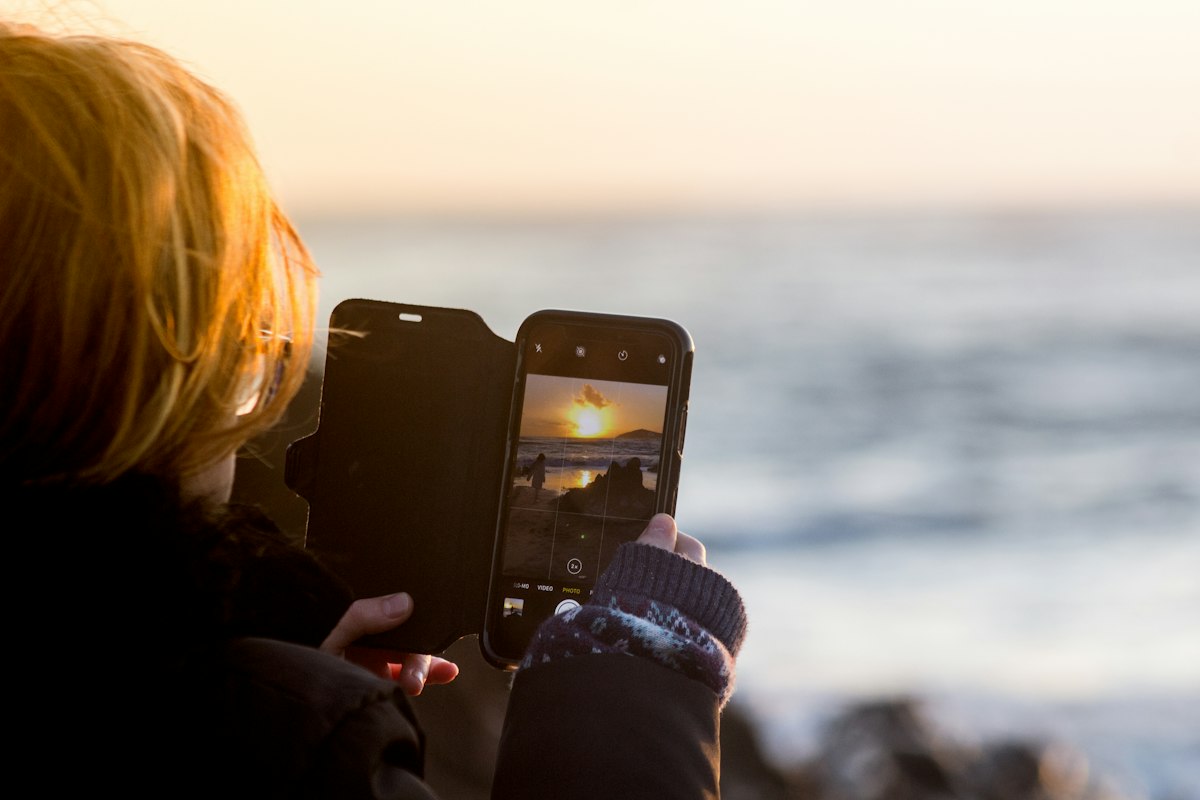
What kit does a solo female travel photographer need?
The best travel photography kit is the one you actually have with you. A mirrorless camera produces better image quality than a phone. It is also heavier, more conspicuous, and more of a decision at every checkpoint. The photography that matters is the photography that happens.
Phone-first approach (recommended for most solo travellers):
- iPhone 15 Pro or equivalent: the 3x telephoto and 0.5x ultra-wide give you three distinct compositions from one position
- Moment lenses (anamorphic, wide) if you want a cinematic ratio
- Peak Design Mobile tripod ecosystem: the snap-together modular system fits in a jacket pocket and holds a phone securely for 10-second self-timer shots
If you carry a camera:
- Mirrorless over DSLR for travel: Sony ZV-E10, Fujifilm X-T50, or OM System OM-5 (weather-sealed, relevant for cottagecore and dark academia destinations)
- A compact travel tripod: Joby GorillaPod 5K wraps around railings, branches, and stone walls. For solo shooting on a flat surface, Peak Design Travel Tripod folds to 28cm
What to leave behind: Drone (restricted at most European heritage sites), large external flash (changes the character of available-light aesthetic spaces), multiple lenses for a first trip to any destination (50mm equivalent does most of what aesthetic travel photography requires)
How do you get self-portraits that do not look staged?
Every solo travel photography article covers the mechanics (tripod, self-timer, burst mode). None of them cover why solo travel self-portraits so often look staged, and how to fix it.
The frozen-smile problem occurs when the photographer walks into frame, stands still, and waits for the timer to fire. The body is tense. The expression is anticipatory. The result looks exactly like what it is: a person waiting for a camera to take their photograph.
The technique that fixes it:
Set your timer to 10 seconds or use a Bluetooth remote. Frame your shot with yourself out of frame first, confirm the composition is correct, then position yourself and begin moving before the shutter fires. Walk toward the camera. Walk away. Turn to look at something off-frame. Crouch to examine something at ground level. The motion and the genuine attention toward something other than the camera produce photographs that look like you were caught rather than posed.
Practical solo shooting setup:
- Scout the location first without your kit (phone walk-through, note the background and light direction)
- Set up your tripod before you need it (not mid-crowd)
- Use the "burst" setting on your timer (shoot 5–10 frames per timer sequence) and edit down to the one where your movement is in the right position
- For phone: use the Apple Watch shutter or a $15 Bluetooth remote, which eliminates the 10-second wait entirely
Safety-aware solo shooting: If your shot requires a tripod setup in a public space, particularly in the evening, position yourself where your back is not to foot traffic and where your bag is within your sightline. For golden hour or blue hour sessions in unfamiliar cities, do a daylight reconnaissance first. This is good compositional practice regardless of safety: knowing your location before the light changes means you shoot the light rather than hunt for your frame in the dark.
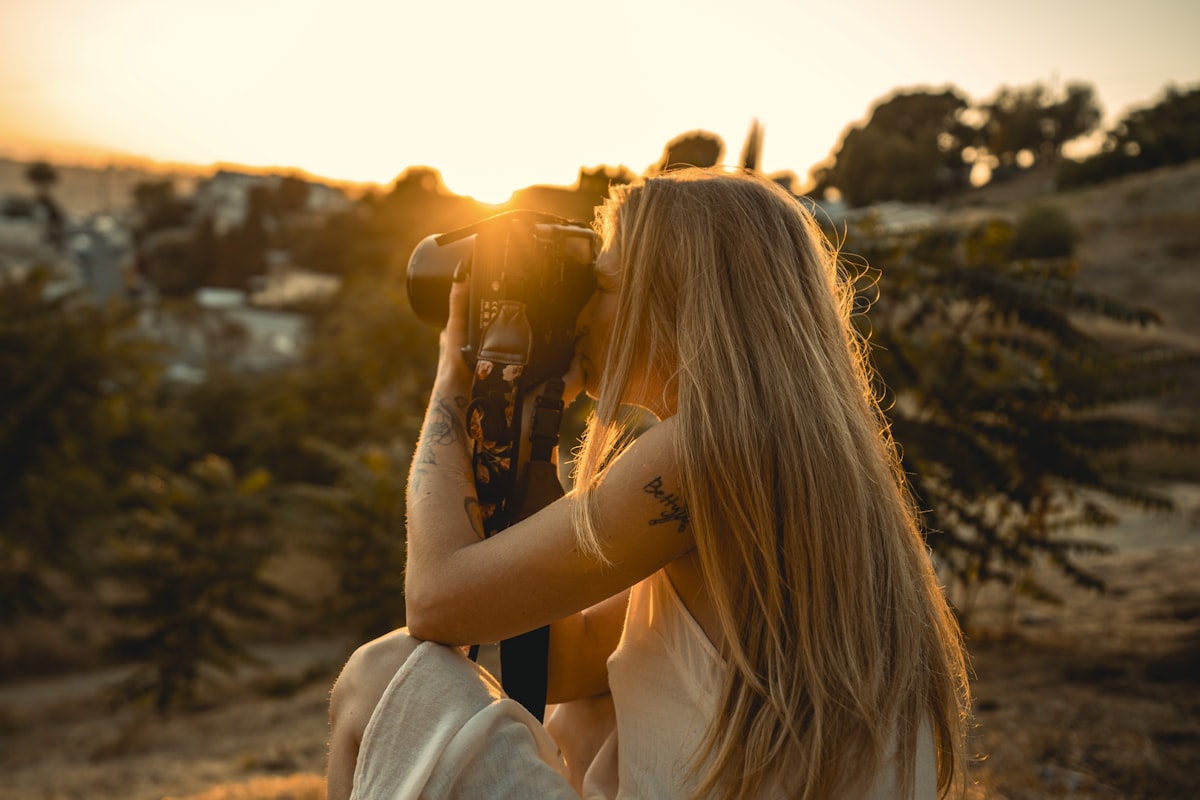
When is the best light for aesthetic travel photography?
The quality of light determines the aesthetic far more than camera settings or composition.
Golden hour (30–60 minutes after sunrise, 30–60 minutes before sunset): The warmest, most directional light. Best for cobblestone streets, architecture, and skin in portraits. October in Northern Europe: golden hour arrives at 7:30am and 4:30pm. October in the Mediterranean: 7am and 6pm.
Blue hour (15–30 minutes after sunset): The sky produces a deep blue that provides contrast for neon, streetlights, and lit architecture without going fully dark. Blue hour is the best window for Y2K neon photography (Shibuya, Hongdae) and dark academia city shots (Edinburgh Royal Mile, Prague Old Town). For more on these specific aesthetics, see the Y2K travel guide and dark academia travel guide.
Overcast light: Underrated. Flat, diffused overcast light is ideal for colour saturation in green landscapes (Irish countryside, Cotswolds), for cottagecore photography where contrast would be too harsh, and for any shot where you need even light across a face without shadows.
Northern European autumn is almost entirely overcast. The aesthetic photographs you associate with the Cotswolds and the Scottish Highlands were mostly taken in flat grey light.
Midday: The least flattering light for most aesthetic travel photography. Hard shadows, bleached colour, contrast too high. Use midday for interiors, covered markets, bookshops, and cafes where the outside light is not a factor.
The Aesthetic Photography Editing Workflow
Consistency in editing creates the aesthetic more than any single compositional choice. A set of photographs edited to the same colour profile looks like a considered body of work. The same photographs edited differently each time looks like a camera roll.
The recommended workflow for solo aesthetic travel photographers:
1. Shoot in RAW (if your phone supports it: ProRAW on iPhone 12 Pro and later). RAW files retain shadow and highlight detail that JPEGs clip irreversibly.
2. Edit in Lightroom Mobile (free version is sufficient). The editing controls are comprehensive and the presets system allows one-tap application of a consistent look.
3. Apply one preset across an entire trip. Aesthetic Photography preset packs (VSCO film simulation packs, Mastin Labs, or the free Lightroom presets from Presetpro) create consistency across all your images from a destination. Choose based on your aesthetic type:
- Warm, desaturated greens and lifted shadows: cottagecore and rural destinations
- High contrast, shadow-heavy cool tones: dark academia cities
- Boosted saturation, candy pinks and teals: Y2K destinations
- Clean, sharp, minimal editing: Japandi or minimalist aesthetic travel
4. Adjust exposure and white balance per image after applying the preset. The preset sets the mood; the per-image adjustments correct for the actual light conditions each shot was taken in.
FAQ: Aesthetic Travel Photography
Do I need a proper camera for aesthetic travel photography?
No, the iPhone 15 Pro and equivalent Android flagships produce commercial-quality images in good light. The limiting factor in most aesthetic travel photography is not sensor size; it is light quality, timing, and composition. A good phone photograph in golden hour will outperform a mediocre DSLR shot at midday every time. Carry a camera if you want to; do not let not having one prevent you from shooting.
How do I find good locations for aesthetic photos without following the same shot list as everyone else?
Research on Pinterest and Instagram before you travel, but specifically look for accounts that have fewer than 50k followers and post content from the destination. Smaller creators tend to photograph genuine local details rather than the landmark shots that dominate larger accounts. Local tourism board websites (Visit Scotland, Normandie Tourisme) often show locations that travel content does not cover. On arrival, walk 15 minutes away from the main tourist area and use your own eye.
What is the best time of year for aesthetic travel photography?
This depends entirely on the aesthetic. Cottagecore and pastoral aesthetics: April through May (wildflowers, blossom) or September to October (golden light, harvest colour). Dark academia: October through February (fog, grey light, early dark). Y2K and cyberpunk: blue hour exists year-round; Tokyo and Seoul in winter have cleaner air and stronger neon-on-dark contrast. Desert and warm-toned aesthetics: autumn and spring avoid the harsh midday sun.
How do I get good solo travel photos without a tripod?
Street furniture is everywhere and most of it holds a phone: ledges, benches, railings, bollards, and bins at the right angle. Place your phone, use a 10-second self-timer, and check the frame before leaving the position. For mirrorless cameras, a GorillaPod wraps around almost any fixed object. A small tabletop tripod that fits in a side pocket covers the vast majority of self-portrait situations.
How do I edit my photos to look consistent across a trip?
Apply one Lightroom preset to all images from the trip, then adjust exposure and white balance per image. Do not use different filters on different photos. The consistency of a single editing approach is what makes a set of travel photographs feel like a coherent aesthetic document rather than a random collection of images.
Sources
- Adobe Lightroom Mobile — mobile photo editing and preset workflows
- Peak Design — Mobile tripod and mobile capture system
- B&H Photo — Joby GorillaPod 5K and travel tripod guides
- Apple — ProRAW capture specification for iPhone Pro
The difference between the photographers whose travel images stop you mid-scroll and the majority is not equipment. It is light, timing, and a specific point of view. The light is free. The timing requires waking up early or staying out past dinner. The point of view is the part you already have.
Ready to plan the trip around the photographs? Travel Anywhere maps your aesthetic destination with the light windows, locations, and timing that match your vision.
Some links in this post are affiliate links. We earn a small commission at no extra cost to you.

Rachel Caldwell — Editorial Director, TravelAnywhere
Rachel Caldwell is the Editorial Director of TravelAnywhere. She leads the editorial team behind every guide on travelanywhere.blog, focusing on primary research, honest budget math, and recommendations the team would book themselves. Last reviewed April 1, 2026.