
Airport Survival for Neurodivergent Travelers: Sensory Maps and Quiet Rooms
You already know the frustrations. The fluorescent lights pulsing overhead at a frequency that nobody else seems to notice. The PA announcements every 90 seconds layered on top of rolling suitcases, crying children, and the low hum of a thousand conversations you never asked to hear. The security line where a stranger is handling your belongings while another stranger is patting you down, and you have not even boarded yet.
You have had a meltdown in an airport bathroom because the gate changed three times and nobody told you until you checked the app. You have missed a connection because the sensory overload in the terminal made it impossible to process which direction to walk. You have sat in a boarding area so loud that by the time you reached your seat, you had nothing left for the actual flight.
This neurodivergent airport guide is built for you. Not for parents traveling with neurodivergent children. Not for corporate travel managers writing an inclusion memo. For you: the autistic adult, the ADHD traveler, the person with sensory processing differences who flies solo and needs a concrete plan for getting from curb to cruising altitude without burning through every resource you have.
Here is what changes when you have a system: airports stop being something you survive and start being something you navigate.
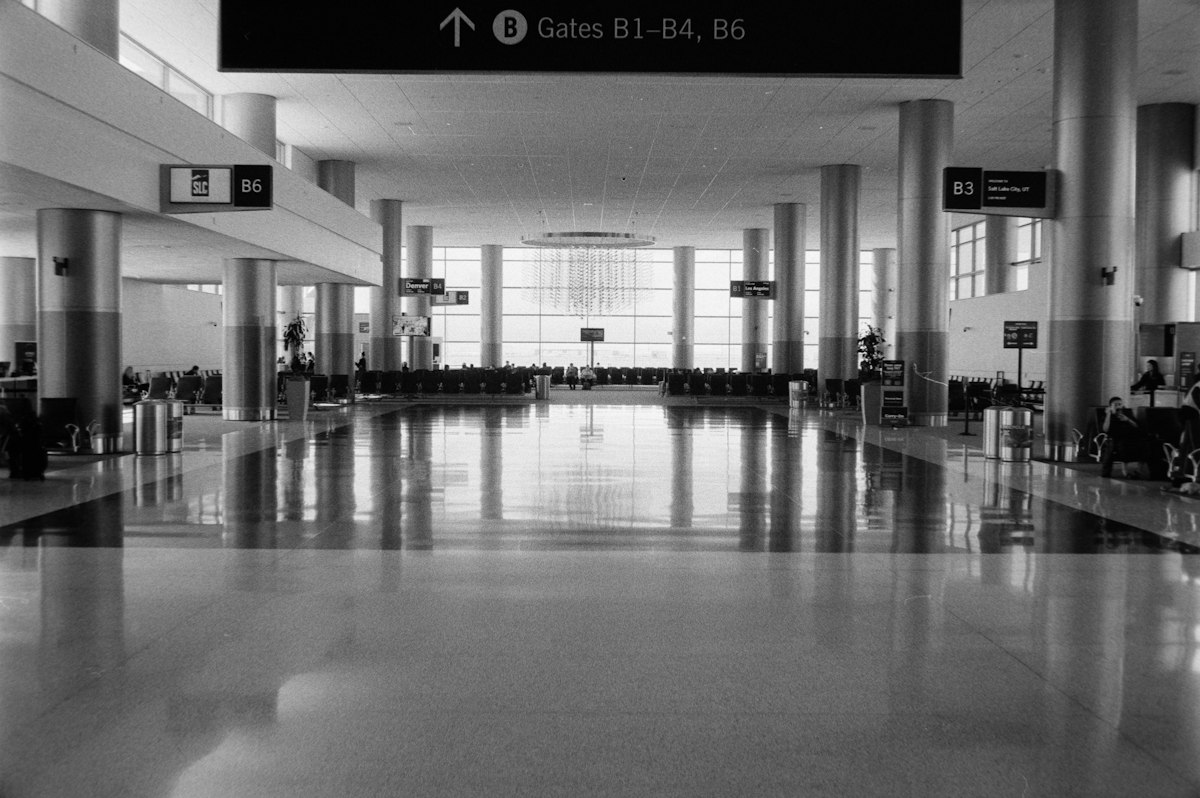
TL;DR: A neurodivergent airport plan works in three layers: pre-airport preparation (sunflower lanyard, TSA notification, pre-printed documents), in-airport sensory management (quiet rooms, noise-canceling headphones, mapped bathrooms), and decompression protocols for layovers and delays. Airports with dedicated sensory rooms include Atlanta, LAX, Dublin, Gatwick, Pittsburgh, and Shannon.
Key Takeaways
- Print physical boarding pass and ID folio as backup so phone sensory overload cannot strand you.
- Request TSA Cares in advance so screeners know you may need extra time or accommodations.
- The Sunflower Lanyard signals hidden disability globally, no medical proof required.
- Airports with dedicated sensory rooms: ATL, LAX, DUB, LGW, PIT, SNN.
- Build in a post-flight decompression protocol: first 4 hours at destination are low-stim, hotel only.
What Should You Do in the 24 Hours Before Your Flight?
The airport experience starts the day before you leave. What you do in these 24 hours determines whether you arrive at the terminal with a full battery or an already depleted one.
Pack your sensory kit first. Before clothes, before toiletries, before your passport, assemble the items that regulate your nervous system. This is not optional. This is infrastructure.
Your sensory kit should include:
- Noise-cancelling headphones (over-ear models like the Sony WH-1000XM5 or Bose QuietComfort Ultra provide the strongest noise cancellation for airport environments)
- Loop earplugs or similar filtered earplugs for when headphones feel too heavy or when you need to hear announcements while reducing volume
- Fidget tools that are TSA-safe (no sharp edges, no liquid-filled items)
- A comfort item that fits in a carry-on: weighted lap pad, specific texture fabric, or a hoodie with a deep hood for visual shielding
- Sunglasses rated for indoor fluorescent light (FL-41 tinted lenses are designed specifically for light sensitivity)
- Snacks you trust. Airport food is unpredictable. Pack foods with textures and flavors you know your body accepts, especially if you have food sensitivities or restrictive eating patterns
- A portable phone charger. Your phone is your map, your schedule, your gate tracker, and your escape into familiar content. It cannot die
Download everything offline. Airport Wi-Fi is unreliable and often requires clicking through captive portals that are their own sensory nightmare. Download your boarding pass to your wallet app. Screenshot your gate information. Save your airport terminal map. Download a playlist, podcast, or show for the flight.
Check the airport sensory map. Many airports now publish accessibility guides or sensory maps on their websites. Search "[airport code] + sensory room" or "[airport code] + accessibility" before you leave. Know exactly where the quiet spaces are, what terminal they are in, and whether they are pre-security or post-security.
Set layered alarms. ADHD brains and time blindness are well-documented travel companions. Set alarms for: when to leave for the airport, when to be through security by, when boarding starts, and when final boarding closes. Label each alarm with the action, not just the time.
Callout: The 3-2-1 Rule for Neurodivergent Airport Arrivals Arrive 3 hours before international flights, 2 hours before domestic flights, and build in 1 hour of pure buffer time on top of that. The buffer is not wasted time. It is decompression time. It is the difference between arriving at your gate already dysregulated and arriving with enough margin to find a quiet corner, eat your safe snack, and breathe.
If you are building a full trip plan around your neurodivergent needs, the neurodivergent travel planning guide covers everything from destination selection to daily scheduling.
Which Airports Have Sensory Rooms and Quiet Spaces?
Sensory rooms in airports have grown from a handful of pilot programs to a genuine network across major hubs. These spaces are free, require no reservation, and are designed specifically for travelers who need a low-stimulation environment.
Here are the airports with dedicated sensory rooms and where to find them:
United States
Hartsfield-Jackson Atlanta International Airport (ATL) Delta partnered with The Arc to build a multisensory room featuring a mini ball pit, bubbling water sculpture, tactile activity panels, and soft lighting. Located in the domestic terminal.
Pittsburgh International Airport (PIT) Presley's Place is a 1,500-square-foot sensory suite with private relaxation pods, a bubbling water wall, tactile panels, and a simulated airplane interior for boarding practice. One of the most comprehensive sensory spaces in any U.S. airport.
San Francisco International Airport (SFO) The Calm Room includes a replica aircraft cabin for boarding practice, dimmable lighting, sound-dampening panels, bubble tubes, and tactile walls. Located in the international terminal.
Miami International Airport (MIA) Two multi-sensory rooms in Concourse D past TSA Checkpoint 4, and another in the H-J connector post-security. Features include bubble tubes, textured walls, soothing lights, and tactile activities.
Newark Liberty International Airport (EWR) Terminal A has two sensory rooms developed with the Anderson Center for Autism. One pre-security (forest-and-riverbank theme) and one post-security (underwater theme with sea-life projections and a mock aircraft cabin).
LaGuardia Airport (LGA) Post-security sensory room in Terminal C near the Delta Sky Club. Dim lighting, beanbag chairs, cushioned seating, and a small replica aircraft cabin.
Boston Logan International Airport (BOS) Sensory-friendly area in Terminal E's newer wing with bubble tubes, a mock airplane cabin, quiet zones with tactile play walls, and calming lighting.
Seattle-Tacoma International Airport (SEA) Sensory Room located on the train level of the A Gates STS Station in the long hallway near the elevators. Free and open daily.
Houston George Bush Intercontinental Airport (IAH) Two sensory rooms in Terminals A and D with adjustable lighting, tactile wall panels, interactive vibration and sound tools, and flexible seating.
Myrtle Beach International Airport (MYR) Quiet room available for anyone who needs to decompress. Smaller airport, which means less baseline stimulation overall.
Tulsa International Airport (TUL) Sensory rooms with rearrangeable beanbag ottomans and fidget tools, plus a separate quiet room with dimmable lighting designed for travelers with PTSD, dementia, or sensory processing needs.
International
Hamad International Airport (DOH), Doha Quiet rooms with low lighting and recliners. The airport's overall design prioritizes open space and natural light, making it one of the least visually cluttered major hubs in the world.
Incheon International Airport (ICN), Seoul Immersive art installations with LED lighting throughout the terminal. Designated rest areas in the transit zone with sleeping pods and quiet corners.
Gatwick Airport (LGW), London Participates in the Hidden Disabilities Sunflower program. Dedicated quiet areas in both the North and South terminals.
Callout: No Sensory Room at Your Airport? Look for: interfaith prayer rooms or meditation rooms (almost always quiet and low-lit), airline lounges (even with a day pass, the noise reduction is significant), gates at the far end of the terminal (fewer people, less noise), or the pre-boarding waiting area near a window with natural light rather than overhead fluorescents.
What Is the Hidden Disabilities Sunflower Lanyard?
The Sunflower Lanyard program is one of the most useful and underused tools for neurodivergent travelers. Wearing a green lanyard with sunflower print signals to trained airport staff that you have a non-visible disability and may need additional time, patience, or support.
What it does:
- Alerts trained staff that you may need extra time or assistance
- Works across airlines, security, gate agents, and airport retail
- No documentation required. No diagnosis paperwork. No questions asked
- Available at over 300 airports worldwide
What it does not do:
- Skip lines or grant priority boarding (though some airlines offer separate accommodations for this)
- Replace the need to communicate specific needs when you have them
- Work at every single airport globally (check hdsunflower.com for participating locations)
How to get one: Pick up a free lanyard at participating airport information desks. You can also order one in advance from hdsunflower.com. Many airports in the U.S. that participate include Minneapolis-St. Paul (MSP), Portland (PDX), Detroit (DTW), Dallas-Fort Worth (DFW), San Jose (SJC), Seattle (SEA), and Anchorage (ANC).
The DPNA code: Separately, you can request that your airline add the Developmental Disability Needing Assistance (DPNA) code to your ticket. This signals to airline staff that you may need arrangements like early boarding or guaranteed companion seating. Call your airline's accessibility line to set this up before your flight.
How Do Neurodivergent Travelers Survive TSA Security?
Security screening is consistently the highest-stress point in the airport experience for neurodivergent travelers. The combination of physical proximity to strangers, time pressure, unpredictable touch, removing personal items, and rapid-fire instructions from multiple directions creates a sensory and executive function bottleneck that is difficult to power through without a strategy.
Before You Reach the Line
TSA PreCheck or CLEAR. This is one of the highest-impact investments a neurodivergent traveler can make. PreCheck means you keep your shoes on, your laptop stays in your bag, and the line moves faster with fewer steps. CLEAR uses biometric scanning to bypass the document check entirely. Together, they reduce the number of transitions, decisions, and physical interactions by roughly half.
Call TSA Cares. The TSA Cares helpline (855-787-2227) exists specifically to help travelers with disabilities. Call at least 72 hours before your flight. A representative can arrange for a Passenger Support Specialist to meet you at security and walk you through the process at your pace.
During Screening
- Wear easy-on, easy-off shoes even with PreCheck. If you get randomly selected for standard screening, you want to minimize the number of steps
- Use a single bin for all your items. Reduce the visual tracking load of watching multiple bins on the conveyor
- If you cannot tolerate the body scanner, you have the right to request a pat-down instead. Tell the officer before you step in. You can also request a private screening room if physical touch from a stranger in a public space is a shutdown trigger
- Stim openly if you need to. There is no TSA regulation against fidgeting, rocking, or using a fidget tool in the security line. If an officer asks about a stim toy, a brief "it's a sensory tool" is sufficient
Callout: The Repack Station Strategy After clearing security, do not immediately walk to your gate. Stop at the repack benches just past the screening area. Put your shoes back on. Reorganize your bag. Put your headphones on. Eat a bite of your safe snack. Give your nervous system 5 minutes to recalibrate before you enter the terminal. This micro-recovery window changes the entire downstream experience.
How Do You Survive the Gate Area Without Burning Out?
The gate area is where many neurodivergent travelers hit the wall. You have made it through security, you are technically where you need to be, and now you are sitting in a bright, noisy, crowded space for 30 to 90 minutes with nothing to do but wait.
Find your spot intentionally. Do not sit in the first available seat at your gate. Walk the gate area and look for: seats near a window (natural light instead of overhead), seats at the end of a row (one fewer person adjacent to you), seats near a wall (reduces the number of directions stimulation can come from), or seats at a neighboring gate that is not currently boarding (dramatically fewer people).
Layer your sensory shielding. Headphones alone may not be enough. Combine noise-cancelling headphones with sunglasses and a hoodie to create a portable low-stimulation environment. This is not antisocial. This is functional.
Set a boarding alarm. Gate announcements are easy to miss when you are deep in sensory regulation mode. Set an alarm for 10 minutes before your boarding group is called so you can begin the transition out of your shielded state gradually rather than being startled by a garbled PA announcement.
Board strategically. If your airline offers pre-boarding for passengers who need additional time, use it. If not, consider boarding last instead of first. Boarding last means a shorter time in the confined, crowded jet bridge and plane aisle, and you walk straight to your seat without standing in a line.
How Do You Manage Sensory Overload in Flight?
The flight itself is often the most predictable part of the journey for neurodivergent travelers. The space is fixed, the timeline is known, and you have your seat. The challenge is managing the sensory environment within that fixed space.
Seat selection matters. Window seats offer a wall to lean against and control over the window shade. Aisle seats offer easier access to stand and move. For sensory regulation, window seats tend to win: you can create a smaller visual world by facing the wall and window, and you only have one seatmate to manage rather than two.
Pressure changes and sensory sensitivity. Cabin pressure changes during ascent and descent can intensify sensory processing difficulties. Chewing gum, swallowing frequently, or using filtered earplugs can reduce the physical discomfort. If pressure changes trigger anxiety, knowing the approximate timeline (first 15 minutes after takeoff, last 20 minutes before landing) helps because you can set a timer and know exactly when it will end.
Noise-cancelling headphones are non-negotiable for flight. Even if you tolerate the airport without them, the engine drone is a constant low-frequency input that depletes your regulation reserves over hours. Put them on before the engines start. Keep them on until the engines stop.
Turbulence and unpredictability. If turbulence is a significant anxiety trigger, check turbulence forecasts before your flight (turbli.com provides route-specific predictions). Knowing whether turbulence is expected, and during which phase of the flight, removes the unpredictability that makes it worse.
How Should You Plan Layovers as a Neurodivergent Traveler?
If mobility is also part of your accessibility profile, see our wheelchair-accessible cities guide for step-free airport transit strategies in major European hubs.
Layovers are either recovery time or additional stress. The difference is planning.
Short layovers (under 2 hours): Stay focused on transit. Use your airport map to find the shortest path to your next gate. Do not add decision-making by browsing shops or restaurants. Go to your gate, find a quiet seat, regulate, and wait.
Long layovers (over 3 hours): This is where sensory rooms, quiet lounges, and intentional decompression become valuable. If your layover airport has a sensory room, plan to spend at least 30 minutes there. If it does not, consider purchasing a day pass to an airline lounge (Priority Pass or individual lounge passes through apps like LoungeBuddy) because the noise reduction alone is worth the cost.
Overnight layovers: If you have a choice, avoid overnight airport stays. The disruption to routine, sleep, and sensory regulation is significant. Book an airport hotel or a nearby hotel with a shuttle instead. The predictability of a private room with a door that locks and lights you control is worth the cost.
For destinations that support your needs beyond the airport, the sensory-friendly destinations guide covers cities and regions that work well for neurodivergent travelers.
What Do You Do When Delays and Gate Changes Hit?
Disruptions are the highest-risk moments for neurodivergent travelers because they destroy the plan you built your regulation around. Here is how to handle them without burning out.
Gate changes: Airlines update gate information in their apps faster than they announce it over PA. Turn on push notifications for your flight. When a gate changes, do not rush. Check the new gate location on the terminal map. Walk there. Find a new quiet spot. Rebuild your micro-environment.
Delays under 2 hours: Stay at your gate area but shift into active regulation mode. Put on headphones. Open a familiar show or game. Eat a snack. Do not try to "wait it out" by just sitting with the disruption. Actively manage your sensory state during the waiting period.
Delays over 2 hours or cancellations: This is when executive function support becomes critical. If you cannot process the rebooking options being offered verbally by a gate agent, use the airline app or call the customer service line (often shorter wait times than the in-person line). If you are traveling with a companion, this is a good moment to ask them to handle the logistics while you regulate.
Missed connections: Go directly to the airline's customer service desk in the arrivals area. You are entitled to rebooking at no cost. If the next available flight is hours away, ask about meal vouchers and lounge access. Some airlines will provide both. Having these options scripted in advance (knowing what you are entitled to and what to ask for) reduces the executive function load of navigating the situation in real time.
Callout: The Emergency Reset Protocol If you are in or approaching a meltdown or shutdown in an airport: find the nearest bathroom, family restroom (single-occupancy with a lock), prayer room, or sensory room. You do not need to explain yourself to anyone. You do not need to apologize. Close the door. Turn off the lights if you can. Sit or lie down. Breathe. Stay there for as long as you need. Your flight can be rebooked. Your nervous system cannot.
Post-Flight Decompression
Landing is not the end of the sensory experience. Deplaning into a new airport, navigating baggage claim, finding ground transportation, and processing a new city's stimuli all happen while your reserves are at their lowest.
Build in a decompression buffer. Do not schedule activities or meetings for the first 2 to 3 hours after landing. Treat that window as recovery time. Get to your accommodation, close the door, and decompress in a controlled environment.
Have your ground transportation pre-booked. Do not make decisions about taxis, rideshares, or transit after a flight. Book your transfer in advance so you can follow a single instruction (go to pickup zone B, look for your name on a sign) rather than making multiple choices in a depleted state.
Eat and hydrate immediately. Flights dehydrate you and disrupt your routine. A predictable meal and a full bottle of water in the first hour after arrival helps your body reset.
Your Neurodivergent Airport Checklist
Save or screenshot this list. Review it 24 hours before every flight.
24 Hours Before:
- [ ] Sensory kit packed (headphones, earplugs, fidget tools, sunglasses, comfort item)
- [ ] Safe snacks packed
- [ ] Phone charger and backup battery packed
- [ ] Boarding pass downloaded offline
- [ ] Airport sensory map checked (search "[airport code] sensory room")
- [ ] Terminal map downloaded or screenshotted
- [ ] Alarms set for: leave house, arrive airport, through security by, boarding starts, final boarding
- [ ] Outfit selected (comfortable, easy-on-off shoes, layers for temperature changes)
- [ ] Ground transportation pre-booked for arrival city
At the Airport:
- [ ] Sunflower lanyard on (if using)
- [ ] Headphones on before entering the terminal
- [ ] TSA PreCheck or CLEAR lane used
- [ ] Repack station pause taken after security (5 minutes minimum)
- [ ] Quiet seat at gate found (window, end of row, near wall)
- [ ] Boarding alarm set for 10 minutes before your group
On the Plane:
- [ ] Headphones on before engines start
- [ ] Window shade position set
- [ ] Comfort items accessible (not in overhead bin)
- [ ] Snack and water within reach
After Landing:
- [ ] Pre-booked ground transportation confirmed
- [ ] 2 to 3 hour decompression window protected
- [ ] First meal planned
FAQ: Neurodivergent Airport Guide
Can I bring fidget tools and sensory items through airport security? Yes. Fidget spinners, putty, stress balls, weighted lap pads, and most sensory tools are TSA-approved for carry-on bags. Avoid items with sharp edges or liquid-filled items over 3.4 ounces. If a security officer asks about an unfamiliar item, "it's a sensory regulation tool" is a complete and sufficient answer.
Do I need a diagnosis to use the Sunflower Lanyard? No. The Hidden Disabilities Sunflower program does not require documentation, a diagnosis letter, or any form of proof. You determine whether you have a hidden disability and whether the lanyard would help you. Pick one up at a participating airport information desk or order in advance from hdsunflower.com.
What is the DPNA code and how do I get it added to my ticket? DPNA stands for Developmental Disability Needing Assistance. It is a code airlines can add to your booking that signals to crew members you may need accommodations like early boarding or companion seating. Call your airline's accessibility or special assistance line at least 48 hours before your flight to request it.
Are airport sensory rooms only for children? No. Airport sensory rooms are available to all travelers of any age. Many were initially designed with families in mind, but they are open to adult travelers and are increasingly designed for adults as well. You do not need to be accompanied by a child to use one.
How do I request a pat-down instead of the body scanner at TSA? Tell the TSA officer before you step into the scanner that you would like to opt out. You will be directed to wait for a same-gender officer to perform a pat-down. You can request a private screening room at any time during this process. Opting out is your legal right and does not require an explanation.
What should I do if I am approaching a meltdown in the airport? Find the nearest single-occupancy space: a family restroom, prayer room, sensory room, or nursing room. Close the door, reduce light and sound if possible, and stay as long as you need. If you are with a travel companion, have a pre-agreed signal (a specific word or gesture) that means "I need to exit this environment now." There is no flight worth a full meltdown. Every flight can be rebooked.
Does TSA PreCheck really make a difference for neurodivergent travelers? Significantly. PreCheck reduces the number of physical steps (shoes stay on, laptop stays in bag, lighter jackets stay on), shortens the line substantially, and eliminates the full-body scanner in most cases. The application process requires one in-person appointment, but the five-year membership removes one of the highest-stress airport interactions from every future trip.
Your Needs Are Not Special Requests. They Are Requirements.
Navigating airports as a neurodivergent traveler is not about lowering your expectations. It is about building systems that match how your brain actually works. Every strategy in this neurodivergent airport guide exists because the standard airport experience was not designed with your neurology in mind, and you deserve tools that close that gap.
Airports are getting better. Sensory rooms are expanding. The Sunflower Lanyard program is growing. Airlines are training their staff. But you do not need to wait for the world to catch up. You can build your own system today, and that system can make flying something you plan with confidence instead of something you dread.
You are not high-maintenance. You are a traveler with specific needs who has every right to meet them.
Sources
- TSA Cares Program: US airport accommodation request system
- Hidden Disabilities Sunflower Lanyard: Global hidden disability recognition
- Airports Council International Accessibility: Airport accessibility standards and programs
- National Autistic Society Air Travel Guide: Autistic flyer preparation resource
- The Arc Airport Sensory Initiatives: Sensory room installations and programs
This post contains affiliate recommendations. If you purchase through our links, we may earn a small commission at no extra cost to you. We only recommend products we genuinely believe improve the neurodivergent travel experience.

Rachel Caldwell — Editorial Director, TravelAnywhere
Rachel Caldwell is the Editorial Director of TravelAnywhere. She leads the editorial team behind every guide on travelanywhere.blog, focusing on primary research, honest budget math, and recommendations the team would book themselves. Last reviewed April 2, 2026.